At the end of a unit of instruction, how do you determine which skills and concepts your students have mastered? Formative assessments provide a clear sense of student progress throughout the unit. Summative assessments, on the other hand, provide information regarding final learning outcomes. This information may be used to revise unit materials for a subsequent group of students.
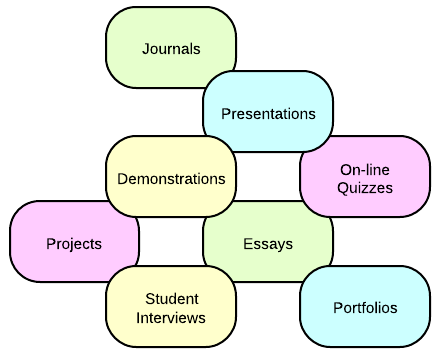
Although formal testing situations come to mind when thinking about summative assessments, a range of differentiated assessments may be used to gain a complete and accurate appraisal of student mastery.
True learning stretches the mind, connects deeply to schema, and can be accessed at a later time to address a range of applications. This level of learning can be assessed through a transfer task, which engages students in utilizing the core skills and concepts of a unit within an authentic context.
In the context of an authentic learning unit, students take the time to learn the embedded skills and concepts as they solve the problem. As they approach the transfer task, students should already have mastered the content needed, so should take only a period or two of class time to construct their responses.