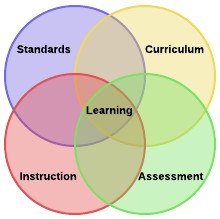
Together, standards, curriculum, instruction, and assessment should produce learning in any educational setting.
Curriculum writing should include the unique spin an organization puts on the standards: what topics would be of interest to the students in the community. Some schools would embrace The Giver, while others would not. The topic of Utopia, dystopian society, and the dangers of conformity are themes presented in a curriculum. Note that these are not mandated in standards; they are topics that may engage students in a unit of study that would include having them master related standards.
Curriculum that is well-suited for the CCSS and similar standards should be problem-based, prompting students to achieve content mastery to the level of understanding and application. While it may make sense to begin with standards and objectives and later add suggested resources, we recommend an “Intuitive Approach” that relies on teachers’ knowledge of students at a particular grade level.
The process includes:
- Brainstorm possible authentic, real-world problems students could solve within a particular content area and for a particular grade level based on experience.
- Identify the standards that are directly addressed through each problem. This process will confirm your problem statement and/or build awareness of the need to increase rigor. Consider other standards that could be addressed with some modifications to the problem.
- Identify the enduring understandings, essential questions, learning targets, and other desired components related to the problem.
- As you develop multiple problems, conduct a “gap analysis” to identify other units needed to address the standards or existing units that could be modified to do so.