Connections abound between content areas taught in the classroom. Teachers often make connections between math and science, or social studies and writing. We know that in the real world, it is the synthesis of all these perspectives that makes someone truly masterful at their work. The engineer who can craft a convincing proposal will win more contracts. The business owner who can both create a working financial plan and design a professional website will attract clients and grow their business. When we make connections in the classroom, we teach students the synthesized application they will need for life.
In the past, schools have at times sought to create “interdisciplinary themes.” They would pick a topic, for example, Egypt. Then, they would attempt to find math, language arts, science, and social studies connections to Egypt. So students might write about the pyramids, study mummification in science, learn about Egyptian social structures, and practice writing Egyptian numbers. The problem with this approach is that generally a topic will fit better for some subject areas than others. If the curriculum allots one day to explore Egyptian numbers, then the teacher may be hard-pressed to tie the next topic of area and perimeter into the theme.
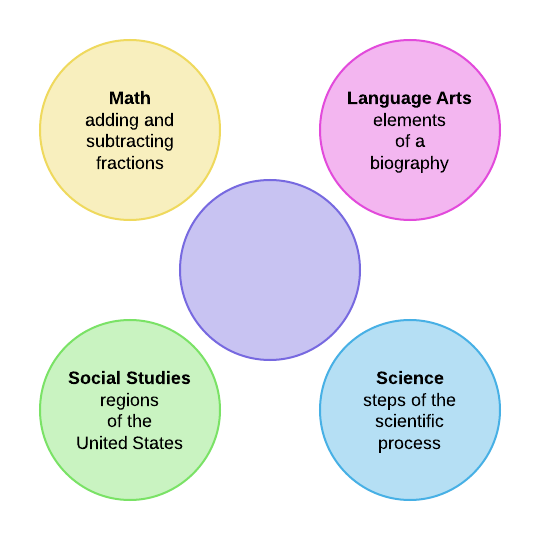
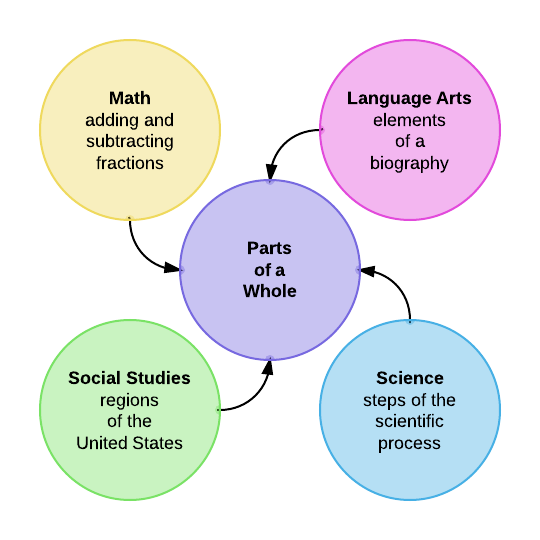
Transdisciplinary themes take a different approach. Rather than starting with a topic, start by identifying the unit content needed to be covered within each subject area. Then, examine the common threads between the different areas, such as:
- pieces
- parts
- process
Now, craft a theme based upon those commonalities. A transdisciplinary theme of this type will allow for natural, authentic connections between content.